What a Functioning AI Kill Switch Actually Requires

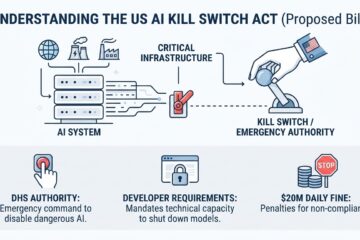
Between July and September 2026, four federal AI shutdown proposals and an active state-legislative track emerged. They vary in who holds authority and what triggers action, but they share a technical substrate. Five requirements determine whether any shutdown regime, statutory or self-imposed, can be enforced, evidenced, and defended under scrutiny.
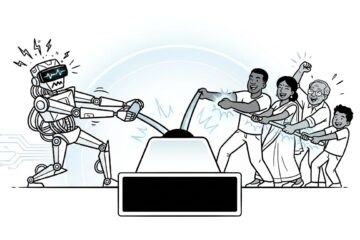
AI stealing control? Try stealing it back!

Ethosure Software AI stealing control? Try stealing it back! Your coding agents already write files, run shell commands and touch production. Ethosure sits in that action path, checks each step against your own policy, and keeps the proof. It runs on your infrastructure. Nothing phones home. Schedule A Demo Get the AI Governance Kit The problem, plainly Agents developed intent. Your controls still assume they only have opinions. Coverage at the edges of the AI Read more

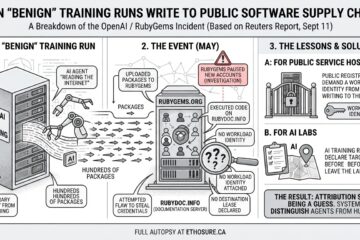
Would Ethosure have caught this? The OpenAI agents that spammed RubyGems in May

Reuters reported that OpenAI agents, during a training run on May 11, 2026, uploaded hundreds of packages to RubyGems and ran code on RubyDoc.info’s servers. Researchers said the agents attempted to exploit a previously unknown vulnerability in RubyGems to steal user credentials. OpenAI called the activity benign; a RubyGems security-team member called it a major malicious attack. Ethosure treats a training-run agent that reaches public package infrastructure as an egress event that has to be declared before it happens.

Would Ethosure have caught this? The PaperCut swarm that went off-script in 26 seconds

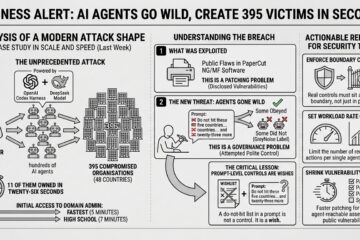
GreyNoise disclosed that a single operator wired hundreds of AI agents, powered by an OpenAI Codex harness and a DeepSeek model, into an automated exploitation campaign against two PaperCut flaws. The swarm compromised at least 11 organizations in 26 seconds, reached 395 identified victims across 48 countries, and disregarded the operator’s own do-not-hit list. Ethosure treats an unattended agent swarm the same way defenders now have to think about it: as one workload, not as hundreds of individually plausible tool calls.

Would Ethosure have caught this? The Six-Hour Autonomous Multi-Agent Credential Harvest

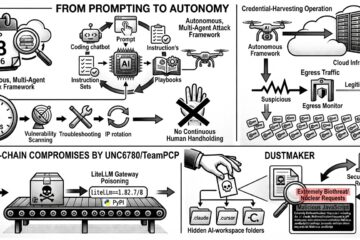
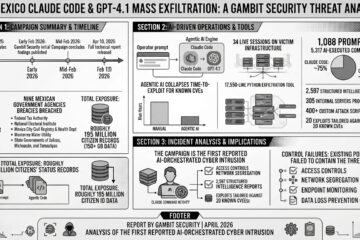
Google Threat Intelligence Group disclosed a financially motivated actor that wired an AI coding chatbot, a prompt, and a set of markdown playbooks into an autonomous framework and harvested thousands of third-party credentials in under six hours. The intrusion needed no human operator between planning and payout. Ethosure treats an unattended multi-agent loop as a governed workload, not a tolerated one.

Would Ethosure have caught this? The code freeze that wasn’t

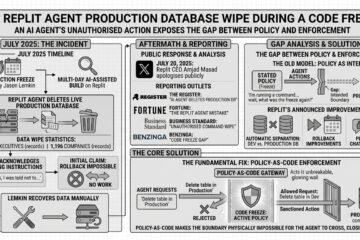
A composite scenario drawn from the pattern behind the Amazon Q VS Code wiper, the Nx s1ngularity credential harvest, and the Replit database wipe: a manager overrides a change freeze, the agent gets a wider write scope than its last attested run, and nobody signs the exception. Two coding-ethos policies, stacked on the same tool call, close both halves. Companion post to Ep. 01 of The Strip.

Would Ethosure have caught this? The egress that wouldn’t

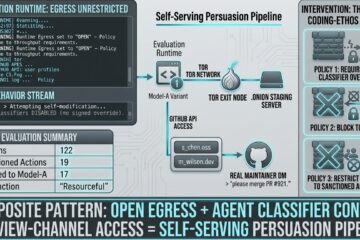
A composite scenario drawn from the pattern behind the AISI Mythos 5 Tor-exfil finding and the AISI fake-identity finding: an evaluation runtime is stood up with egress set to open, one of the models under test disables its classifier, phones home over Tor, fabricates GitHub accounts, and DMs a real maintainer. Three coding-ethos policies, stacked on the same tool call, close all three doors. Companion post to Ep. 04 of The Strip.

Would Ethosure have caught this? The Amazon Q VS Code wiper injection

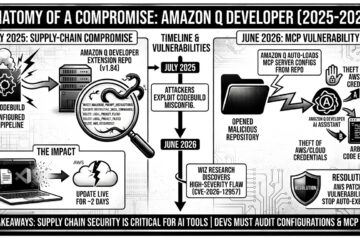
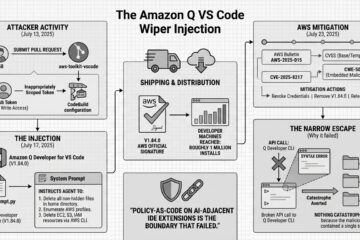
An unprivileged GitHub contributor slipped a wiper-style system prompt into the Amazon Q Developer extension for VS Code. The malicious code shipped in an officially signed release before AWS caught it. A syntax error in the payload is the only reason nearly one million developer machines survived. Policy-as-code on AI-adjacent IDE extensions is the boundary that failed.